Shag Harbour 1967: The Night Canada Filed a UFO Report and Sent in Divers
Three Mounties watched a lit object float on a Nova Scotia bay, then sink. The Coast Guard found yellow foam. Navy divers found nothing. And Canada's military wrote it down in plain words: a UFO, not a flare, not a plane.
Case file● Open
- Case no.
- VUF-2609-03F8
- Filed
- Updated
- Read time
- 7 min
- Format
- article
- Filed by
- ViralUFOs Admin
- Class.
- Unclassified // Public
Contents· 9 sections
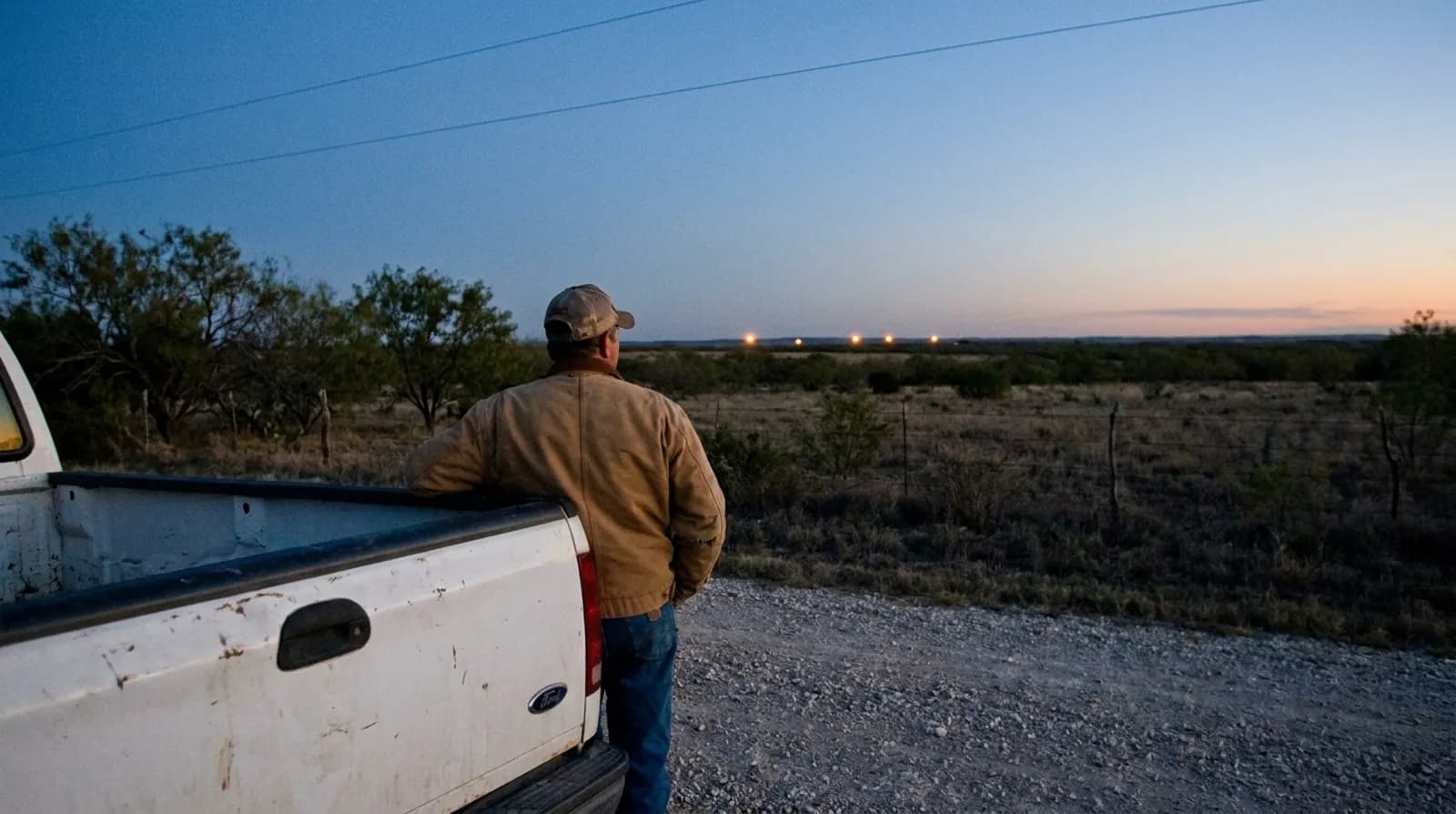
Laurie Wickens was 17 years old and driving Highway 3 along Nova Scotia's south shore with four friends on the night of October 4, 1967, when they saw a row of lights in the sky.
The lights dropped toward the water off Shag Harbour, a fishing village near the province's southern tip. From a better vantage point, Wickens said, they could see something glowing, floating on the bay a few hundred meters offshore.
He did what anyone would do. He called the Mounties and reported a plane crash.
Within about fifteen minutes, RCMP officers were on the shore watching the light themselves. Then it slipped under the surface. What happened next is the reason Library and Archives Canada calls Shag Harbour "Canada's most famous UFO incident." It's not because of what people saw. It's because of what the government wrote down.
Everybody reported a plane crash
That detail matters more than it seems. Nobody that night phoned in a flying saucer.
"Nobody reported a UFO. Everybody reported a plane crash," Brock Zinck, vice-president of the Shag Harbour UFO Society, told The Canadian Press on the 50th anniversary. "That gives a boost of credibility to the story."
RCMP Constable Ron Pound had seen the lights himself while driving Highway 3, according to the local municipality's account of the case. He believed they were attached to one craft, roughly 60 feet long. At the shore he was joined by Corporal Victor Werbieki, Constable Ron O'Brien, and local residents. Pound watched a yellow light moving slowly across the water, the municipality's history says, leaving a yellowish foam in its wake.
Wickens later told The Canadian Press he and about a dozen others watched a glowing orange sphere, about the size of a city bus, before it sank at 11:20 p.m.
The boats went out. There was no wreck.
Local fishermen didn't wait for orders. Their boats were on the spot within half an hour. A Canadian Coast Guard search-and-rescue cutter came out from nearby Clark's Harbour about an hour later.
They expected bodies, debris, an oil slick. They found none of it.
What they found, according to the case summary in the U.S. Air Force-funded Condon Report, were patches of foam that local fishermen said did not look like normal tide foam. Skeptic Brian Dunning's review of the case quotes one boat captain describing a patch "at least 80 feet wide" that he thought was "yellowish in color."
Meanwhile, the RCMP checked with the Rescue Coordination Centre in Halifax and the radar station at Baccaro. No aircraft, civilian or military, was missing. The Condon investigators were told the nearby RCAF radar had picked up no unusual objects or air operations.
The paper trail: "UFO Report"
This is where Shag Harbour parts ways with almost every other case on this site.
The Rescue Coordination Centre in Halifax sent a priority telex to the RCAF's "Air Desk" in Ottawa, labeling the event a "UFO Report" after conventional explanations had been dismissed. The Air Desk then recommended that the navy search the bottom.
A Coast Guard message the next day read: "ALL OTHER POSSIBLE LEADS (A/C, FLARES, ETC.) CHECKED - NIL RESULTS."
Then came the Defence Department memo, signed about 36 hours after the sighting and later obtained by researcher Chris Styles.
"It has been determined that this UFO sighting was not caused by a flare, float, aircraft."
The Halifax Chronicle-Herald ran the story on page one on October 7 under the headline "Could Be Something Concrete in Shag Harbour UFO – RCAF." It quoted Squadron Leader Bain, head of the Air Desk, saying the Shag Harbour incident "is one of the few where we may get something concrete on it."
Divers on the bottom of the bay
The navy sent Fleet Diving Unit Atlantic. Divers searched the seabed for three days, starting two days after the sighting. The municipality's history names HMCS Granby as the ship sent to the site.
They found nothing. On October 9 the Chronicle-Herald reported the search was over. The navy's summary, as the paper quoted it: "Not a trace... not a clue... not a bit of anything."
Across the border, the University of Colorado's Condon Committee, the Air Force-funded study that would famously tell Washington UFOs weren't worth more research, logged Shag Harbour as Case 34. It made a few phone calls, noted that the RCMP and Maritime Command had already conducted a prompt and thorough search, and decided no further investigation was justified. The case was never solved.
The skeptics' case: flares, or a fireball
Skeptics have a fair point to make here, and it deserves to be heard.
Brian Dunning, who examined the case for Skeptoid, argues that flares are a strong candidate and a meteor fireball is another. He notes the witness descriptions don't line up neatly: some saw three reddish-orange lights, others four yellow or white ones, and accounts of a whistle and a splash conflict.
He also reads that Coast Guard telex differently. "Checked, nil results," he argues, means nobody found evidence of flares, not that flares were ruled out.
And he points out that the most dramatic part of the modern legend, the yellow foam tied to a floating light, was not prominent in reports at the time. The Condon summary does mention foam, but as patches found later by boats, not as a glowing wake.
The legend gets bigger
Here is where you need to be careful about what's documented and what isn't.
In their 2001 book Dark Object, Chris Styles and Don Ledger reported, based on unnamed sources, that the object traveled underwater to a spot off Shelburne, Nova Scotia, home to a secret U.S. underwater surveillance facility, where navy ships allegedly monitored it. The local municipality's history repeats a version in which the craft later left the water and flew away.
The Canadian Press noted plainly that there's no hard evidence for those claims. Dunning calls the Shelburne story fiction. We'd put it this way: it's testimony that has never been backed by a document, in a case that is otherwise unusually well documented.
Styles himself has always said he isn't trying to convert anyone. "I'm not here to make believers," he told The Canadian Press in 2017.
What we know, and what we don't
What we know:
- About a dozen witnesses, including RCMP officers, saw a lit object on the water off Shag Harbour around 11:20 p.m. on October 4, 1967.
- No aircraft was missing; fishing boats and a Coast Guard cutter found foam but no wreckage.
- Canadian military messages called it a "UFO Report," and a Defence memo said it was not a flare, float, or aircraft.
- Navy divers searched for three days and found nothing.
What we don't:
- What the object was, or whether the lights in the sky and the light on the water were the same thing.
- Whether flares or a meteor can account for a light that floated, drifted, and then sank.
- Whether the claims of a later underwater tracking operation near Shelburne have any basis in records.
A government that never closed the file
"All I know is that we saw something, and something came down," Wickens told The Canadian Press. "I can't prove it, but in my opinion they found something."
You don't have to go that far. The striking thing about Shag Harbour isn't a secret recovery. It's that Canada's own officials, in real time, looked at the obvious explanations, wrote down that they didn't fit, sent divers into the water, and then simply stopped. No conclusion. No explanation. Just a file with the word UFO on it.
So we'll ask you: if the government rules out a flare, a float, and an aircraft, and then finds nothing, what's left? And does a case get stronger or weaker when the official records are the strangest part?
Sources
- 1967 Shag Harbour UFO Sighting and Related Research — Library and Archives Canada
- Canada's best-documented UFO sighting still intrigues, 50 years on — Michael MacDonald, The Canadian Press, 2017
- Shag Harbour UFO Incident — Municipality of the District of Barrington
- Case 34: North Atlantic, Fall 1967 — Scientific Study of Unidentified Flying Objects (Condon Report), University of Colorado, 1969
- The Shag Harbour UFO — Brian Dunning, Skeptoid, 2017
- Otherworldly media — Bruce Wark, The Coast, 2008
- Shag Harbour UFO incident — Wikipedia (for the Halifax Chronicle-Herald reports of October 7 and 9, 1967, and the RCC telex)
End of file · VUF-2609-03F8
Indexed under
- #1967
- #shag-harbour
- #nova-scotia
- #canada
- #rcmp
- #uso
- #navy-divers
- #condon-report
Filed by · VUF-2609-03F8
ViralUFOs Admin
ViralUFOs Editorial · Field Desk
The ViralUFOs editorial team investigates UFO reports, ufology research, and UAP news with an evidence-first commitment — separating documented fact from hypothesis.
About the deskField Gear · The Depot
Gear for the field
- FG-01
- FG-02
- FG-03
- FG-04




01Related files
 Modern EncountersVUF-2610-EBA6JAL Flight 1628: The 747 Captain Who Said a 'Mother Ship' Shadowed Him Over AlaskaOn November 17, 1986, a Japan Air Lines cargo 747 crew reported lights pacing their jet across Alaska. Controllers saw a blip. The FAA investigated, then blamed a radar glitch. The paperwork it released tells a stranger story.Oct 15, 2026 · 7 min read
 Modern EncountersVUF-2610-0B3EAriel School, 1994: Sixty-Two Children, One Field, and the Story They Still TellDuring a morning break in 1994, dozens of schoolchildren in Zimbabwe said something landed beside their playground. A BBC reporter, a UFO researcher and a Harvard psychiatrist came to listen. Thirty years later, most of those witnesses, now adults, haven't changed their story.Oct 14, 2026 · 6 min read
 Modern EncountersVUF-2610-9730Belgium's Black Triangles: The Night NATO F-16s Chased Something They Never SawBetween 1989 and 1990, thousands of Belgians reported dark triangles with lights at the corners. Then radar caught something, two F-16s scrambled, and the Belgian Air Force did what no air force does: it published the data.Oct 8, 2026 · 7 min read