
Every so often a single event arrives that you simply cannot argue your way around. The 2004 encounter off the coast of Southern California is one of those events. It was not a farmer with a blurry photograph. It was not a lonely voice on late-night radio. It was the United States Navy — the most sensor-saturated war machine humanity has ever built — staring at something it could not name, and admitting as much on the record.
If you want to understand why the conversation around this subject changed forever, you start here, in the cold air over the Pacific, aboard the USS Nimitz Carrier Strike Group.
Two Weeks of Impossible Contacts
For days before anyone laid eyes on it, the radar operators aboard the cruiser USS Princeton watched objects appear high in the atmosphere — above 80,000 feet — and then drop to just above the ocean surface in a matter of seconds. Not glide. Not descend. Drop. The kind of altitude change that would tear a conventional aircraft and its pilot apart.
The crew was sharp. They assumed, at first, that their newly upgraded radar was glitching. So they ran the diagnostics. The system was working perfectly. The contacts were real, and they were doing things nothing in our inventory can do.
"It Rapidly Accelerated and Disappeared"
On November 14, 2004, two F/A-18F Super Hornets were vectored toward one of the contacts. In the lead jet was Commander David Fravor, a Top Gun-trained naval aviator with no reason on Earth to invent a story that would follow him for the rest of his career.
What he found below him was a disturbance in the water, as if something just beneath the surface were churning it. And hovering above that disturbance was a smooth, white object with no wings, no rotors, no exhaust, and no visible means of staying in the air. It was shaped, famously, like an enormous Tic Tac.
"It was going forward, backward, side to side. It had no wings, no rotors. As I went to it, it rapidly accelerated and disappeared." — Cmdr. David Fravor, USN (Ret.)
When Fravor cut toward it to get a closer look, the object seemed to register his intent. It mirrored his movement, climbed, and then — in his own description — vanished. Seconds later, the Princeton's radar reacquired it sixty miles away, at the precise coordinates the air crews had been briefed to fly to next. Read that again. It beat them to a destination they had not announced out loud.
The Part Skeptics Cannot Wish Away
Here is the spine of the case, and it is the reason it refuses to die quietly:
- It was tracked on the advanced AN/SPY-1 radar aboard the Princeton — instruments, not eyeballs.
- It was captured on the forward-looking infrared (FLIR) targeting pod of a third aircraft, producing the now-famous "FLIR1" footage.
- It was witnessed by multiple trained military aviators and operators, independently, in daylight.
This is the holy grail that debunkers always demand and rarely get: corroboration across radar, infrared, and trained human observers, all at once. When a flock of birds or a weather balloon shows up on one sensor, it does not also outmaneuver a fighter jet and teleport across sixty miles of ocean.
When the Pentagon Stopped Denying It
For years the footage circulated in the shadows. Then, in 2017, it surfaced publicly, tied to a quietly funded Pentagon program that had been studying exactly these incidents. In 2020, the Department of Defense did something it had spent seventy years refusing to do: it officially released the videos and confirmed they were real, unexplained, and captured by Navy personnel.
Sit with the enormity of that. The government did not say "swamp gas." It did not say "the planet Venus." It said, in effect, we don't know what this is.
It Was Not the Only One
The Tic Tac does not stand alone, and that is what should keep you up at night. The same Pentagon disclosure that confirmed the 2004 FLIR1 footage also released two other Navy clips — known as "Gimbal" and "GoFast" — captured years later off the East Coast by entirely different crews. In the Gimbal footage you can hear the aviators themselves, their voices rising as a dark object rotates against the wind: there is a fleet of them out there, one says, openly stunned. These were not isolated jitters from a single tired crew. By the pilots' own testimony, objects with the same impossible signatures were turning up near Navy assets so routinely that aircrews began treating them as a genuine flight-safety hazard and filing reports up the chain. A lone anomaly can be rationalized. A recurring pattern — logged across years and oceans, by the same military that builds the most advanced aircraft on the planet — cannot be waved away as a glitch or a trick of the light.
Why the Tic Tac Changed Everything
The Nimitz encounter is powerful precisely because it is so unglamorous. There are no little green men, no abduction, no glowing message of peace. There is only a piece of hardware that flew circles around the finest pilots and sensors we have, and a chain of command that ultimately admitted it could not account for it.
Whatever the Tic Tac was, the people on Earth best trained to identify aircraft looked straight at it and could not. That is not a story about belief. That is a story about evidence — and the evidence, for once, is on the record, declassified, and waiting for an explanation that conventional aviation simply cannot provide. The honest conclusion is the uncomfortable one: something real, intelligently controlled, and far beyond our technology shared the sky with us that day, and we have been chasing it ever since.
Written by
ViralUFOs Admin
The ViralUFOs editorial team investigates UFO reports, ufology research, and UAP news with an evidence-first commitment — separating documented fact from hypothesis.
More about us →More from this section
 Modern Encounters
The Voronezh Landing: When Soviet State Media Said It Was Real
In 1989, the official news agency of the Soviet Union told the world that a UFO had landed in a city park — and that children had watched a towering, three-eyed being step out of it. Closed states do not file reports like that for fun.
 Modern Encounters
Rendlesham Forest: The Encounter the Military Wrote Down
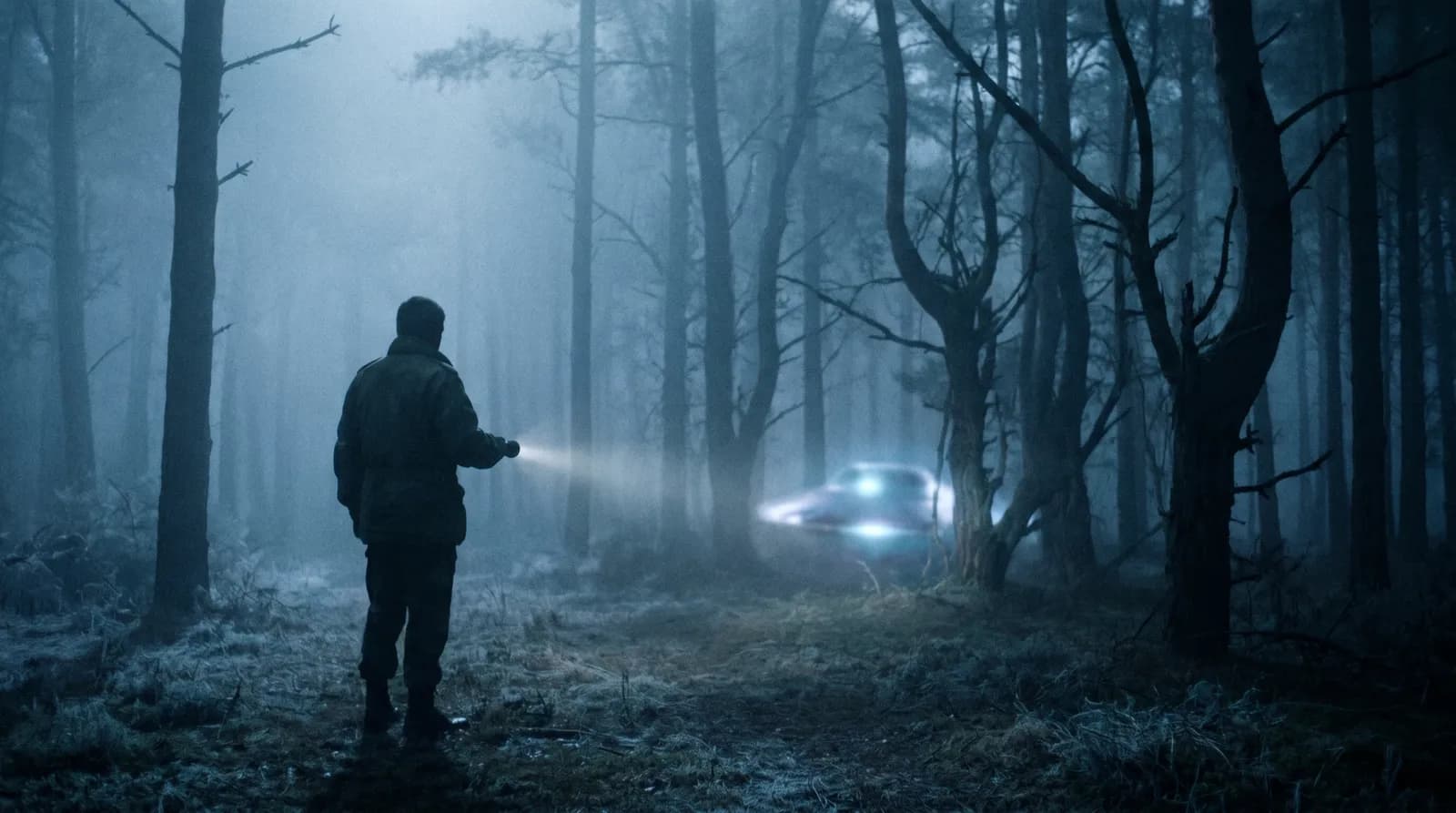
Over three nights in December 1980, U.S. airmen guarding a nuclear-capable base in England walked into the trees after a light — and one of them says he touched the craft. Their deputy commander put it in an official memo.
 Modern Encounters
Roswell, 1947: The Press Release the Military Took Back
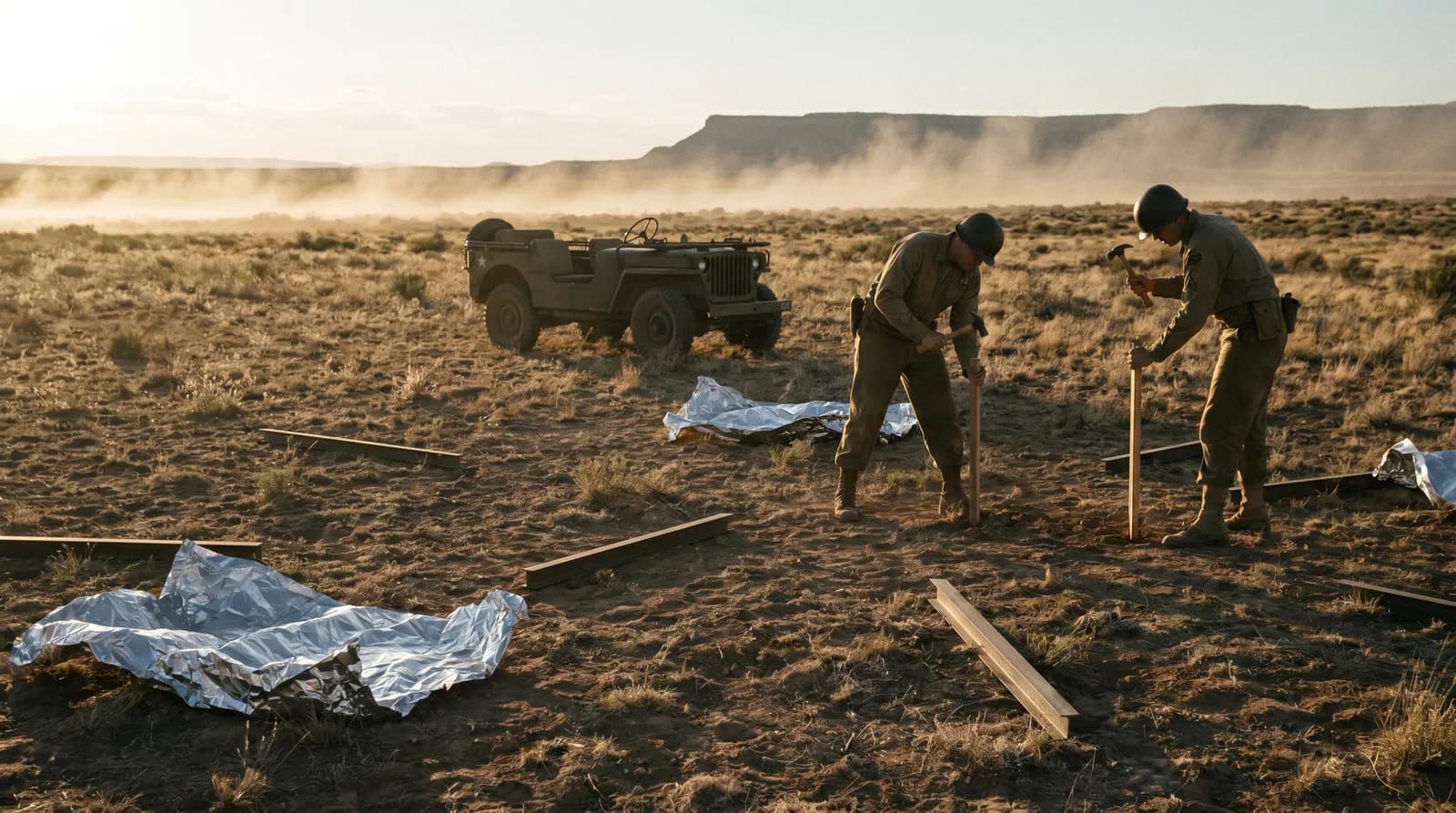
The U.S. military announced it had recovered a 'flying disc' near Roswell — and then unannounced it within hours. Every cover story since has been an attempt to explain away that first, honest sentence.

The Dispatch
Stay Informed.
Stay Curious.
The latest UAP news, fresh sightings, and evidence-first analysis — delivered to your inbox. No noise.
No spam. Unsubscribe anytime.