
No two words in this entire field carry more weight than "Roswell, New Mexico." The case has been buried under so many decades of embellishment, hoaxes, and Hollywood that even sincere people roll their eyes at it. But strip away the noise and you are left with a small, hard core of fact that has never been satisfactorily explained — and it starts with a government that told the truth for about twenty-four hours before thinking better of it.
What Actually Happened
- In early July 1947, a rancher named Mac Brazel found a field of strange wreckage scattered across his property northwest of Roswell — foil-like material, lightweight beams, and debris that witnesses said behaved unlike anything they had handled.
- The debris was brought to the Roswell Army Air Field, home at the time to the only nuclear-armed bomber group on the planet.
- On July 8, 1947, the base issued a formal press release announcing that the Army had recovered a "flying disc." Newspapers across the country ran it.
- Within hours, the military reversed itself. A new statement said the wreckage was merely a downed weather balloon, and produced a balloon for the cameras.
The Memory in the Metal
The man who handled the debris was Major Jesse Marcel, the intelligence officer of that elite bomb group — precisely the kind of professional you would trust to recognize a weather balloon on sight. Marcel spent the rest of his life insisting that what he recovered was nothing of the sort. He described a foil that could be crumpled in your fist and would then spring back, perfectly smooth, leaving no crease. He described beams etched with symbols. These are the recollections of a senior military officer, not a tabloid.
"It would not burn, it would not tear, and when you crumpled it, it straightened itself back out. I had never seen anything like it, and I have never seen anything like it since." — paraphrased from Jesse Marcel's accounts
Project Mogul, and the Gap It Leaves
Decades later, the Air Force offered its final answer: the debris belonged to Project Mogul, a top-secret program of high-altitude balloons designed to detect Soviet nuclear tests. And to be fair, Mogul does a reasonable job of explaining the materials — exotic foils and balsa-like struts could plausibly come from a classified balloon array.
But Mogul explains the debris far better than it explains the behavior of the men around it. Why would a base that routinely handled the most secret hardware in the arsenal mistake their own balloon project for a "flying disc" and broadcast it to the national press? Why the rapid, almost panicked reversal? Why would a seasoned intelligence officer stake his reputation, for decades, on the claim that this was something extraordinary?
The Summer the Sky Filled With Saucers
Roswell did not happen in a vacuum, and that context is half the case. Just weeks earlier, in late June 1947, a private pilot named Kenneth Arnold reported nine gleaming objects flying in formation past Mount Rainier at impossible speed, describing their motion as like saucers skipping across water. A newspaperman coined the phrase "flying saucers," and within days the entire country was looking up. The summer of 1947 was a national wave of sightings — the cultural moment into which the Roswell debris fell. Something had the public, and the military, on edge before the first piece of foil ever reached the base.
And Marcel was not the only insider who never let it go. Walter Haut, the public information officer who personally issued that "flying disc" press release on the base commander's orders, maintained for the rest of his life that the recovery was real and extraordinary — and left behind a sealed affidavit, to be opened after his death, restating it in even stronger terms. Other Roswell residents recalled the sudden arrival of military police, the cordoning of the ranch, and stern instructions to say nothing. People lie, and memory drifts; the believer concedes both. But when the base's own press officer goes to his grave insisting the disc was real, the easiest explanation — mass confusion over a weather balloon — starts to wear thin.
Where Roswell Really Lives
Honesty requires admitting that the wildest parts of the Roswell legend — the bodies, the live alien, the autopsy film famously exposed as a staged fake — are not supported by the contemporaneous record. The believer who wants to be taken seriously should let those go. They are barnacles on the hull, not the ship.
The ship itself is still seaworthy. Strip away seventy years of accretion and you are left with this: the United States military publicly announced the recovery of a flying disc, then retracted it within a day, and a senior officer who held the material went to his grave insisting it was not of this world. Project Mogul covers the foil. It has never quite covered the cover-up. That gap — small, stubborn, and never closed — is exactly where Roswell still lives.
Written by
ViralUFOs Admin
The ViralUFOs editorial team investigates UFO reports, ufology research, and UAP news with an evidence-first commitment — separating documented fact from hypothesis.
More about us →More from this section
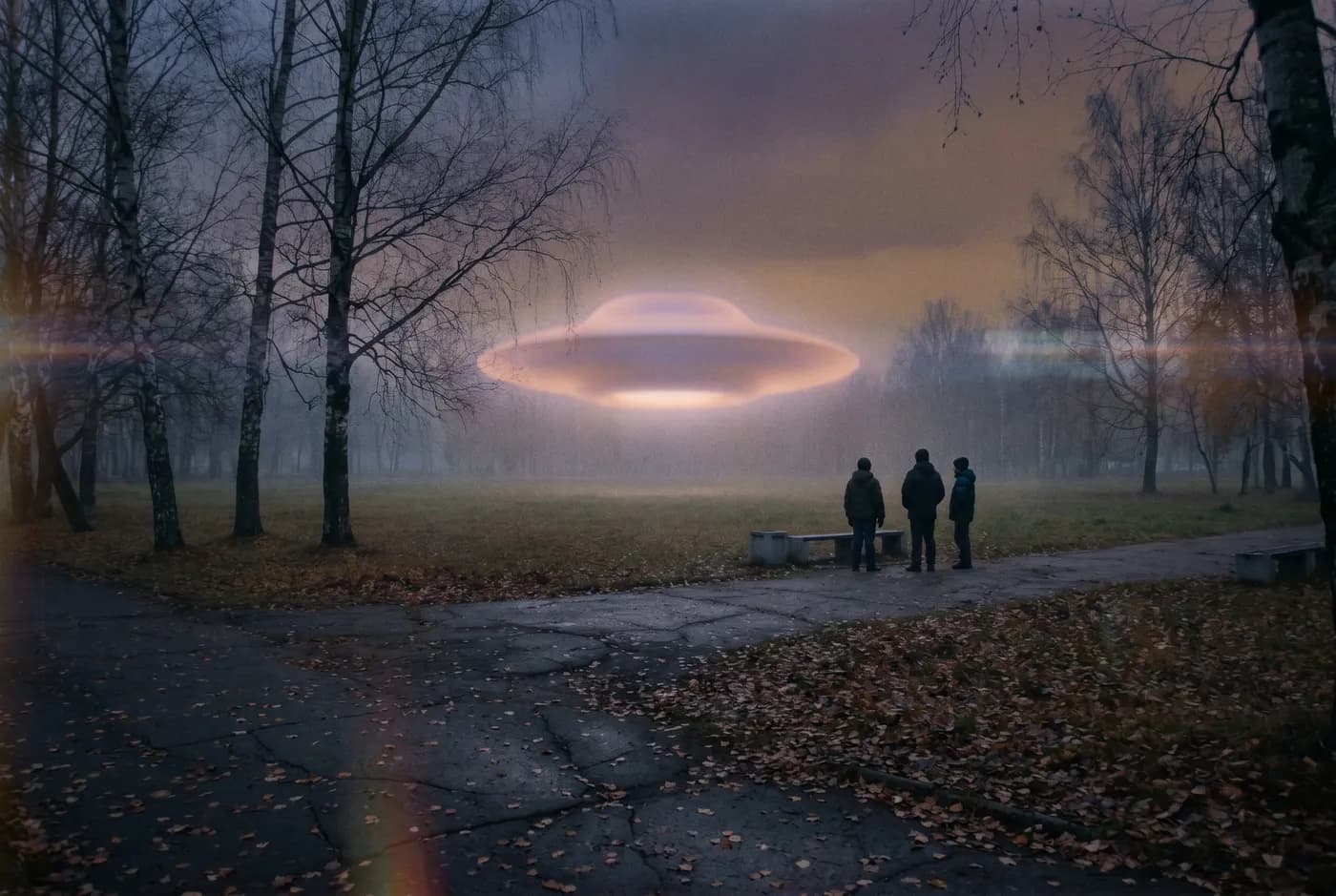 Modern Encounters
The Voronezh Landing: When Soviet State Media Said It Was Real
In 1989, the official news agency of the Soviet Union told the world that a UFO had landed in a city park — and that children had watched a towering, three-eyed being step out of it. Closed states do not file reports like that for fun.
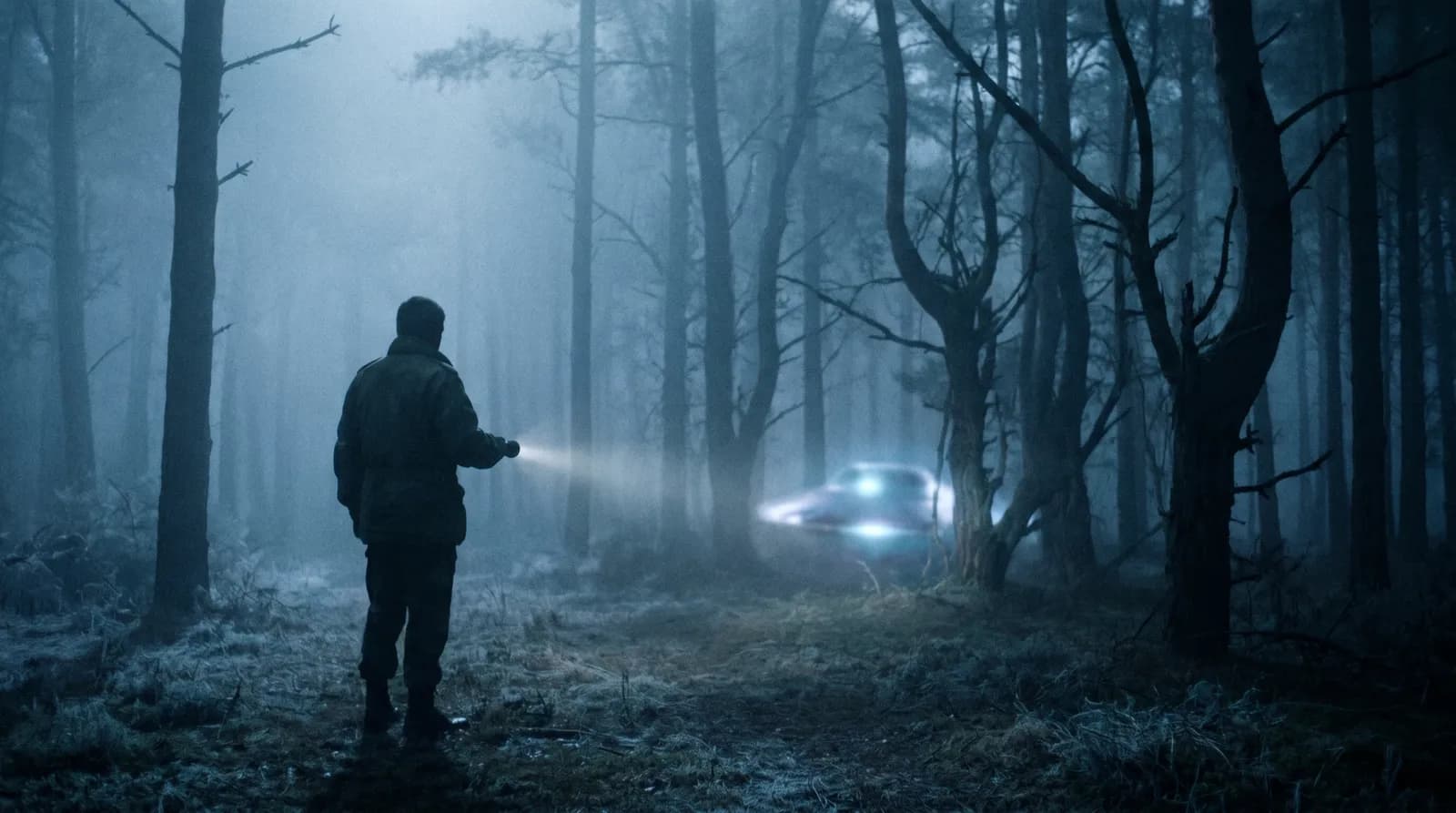 Modern Encounters
Rendlesham Forest: The Encounter the Military Wrote Down
Over three nights in December 1980, U.S. airmen guarding a nuclear-capable base in England walked into the trees after a light — and one of them says he touched the craft. Their deputy commander put it in an official memo.
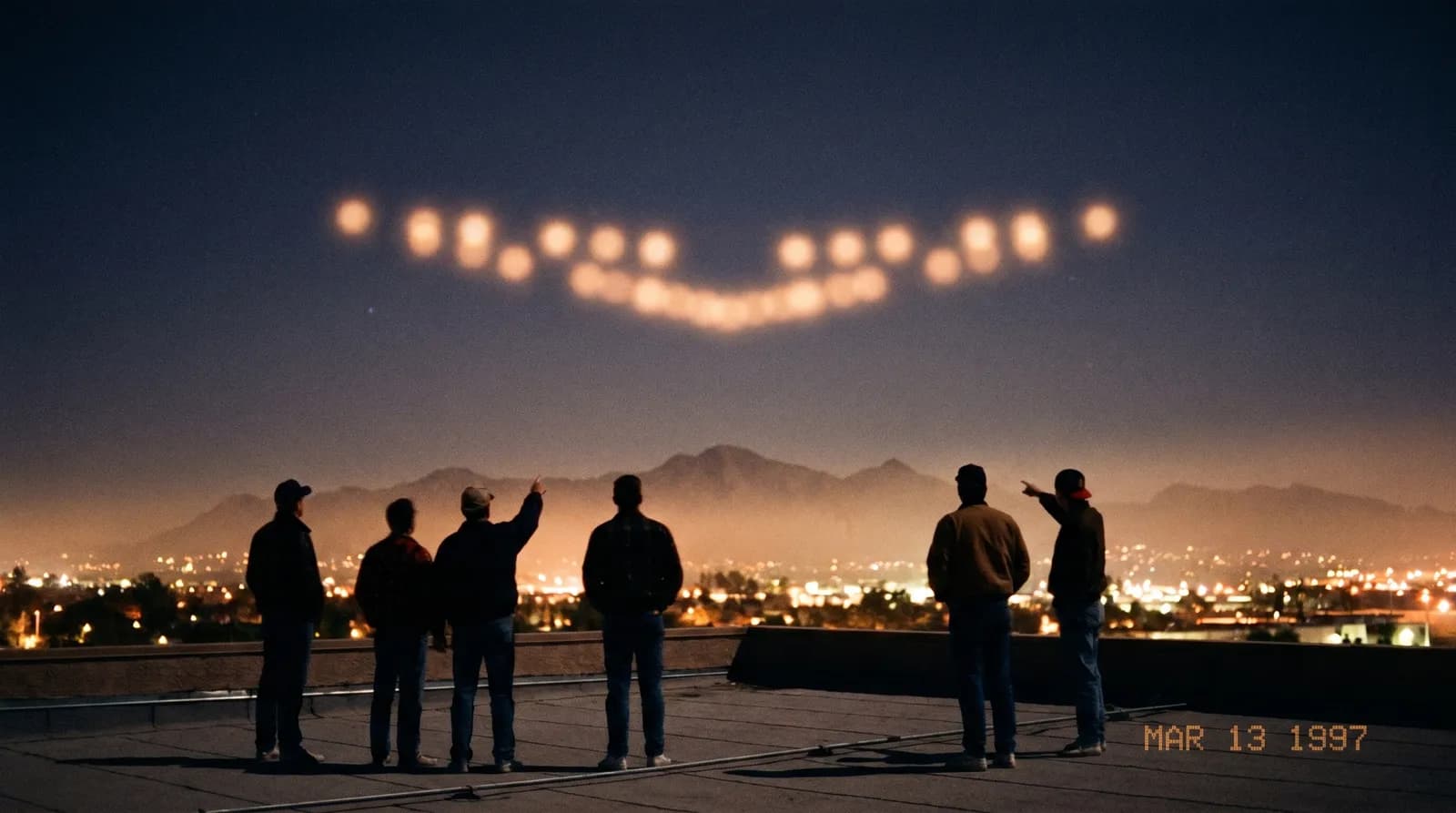 Modern Encounters
The Phoenix Lights: The Night a Whole City Looked Up
On March 13, 1997, thousands of Arizonans watched a silent, mountain-sized V of lights glide over their homes. You cannot mass-hallucinate something that blots out the stars.

The Dispatch
Stay Informed.
Stay Curious.
The latest UAP news, fresh sightings, and evidence-first analysis — delivered to your inbox. No noise.
No spam. Unsubscribe anytime.