The Navy Tells Its Pilots: Report What You Can't Identify
In April 2019 the U.S. Navy confirmed it was drafting new rules for pilots to report 'unidentified aircraft' over its training ranges. No saucers, no aliens, just a paperwork change. It turned out to be the quiet start of the modern UAP era.
Case file● Open
- Case no.
- VUF-1904-27C8
- Filed
- Updated
- Read time
- 7 min
- Format
- article
- Filed by
- ViralUFOs Admin
- Class.
- Unclassified // Public
Contents· 10 sections
For decades, the unofficial rule in military aviation was simple. If you saw something strange in the sky, you kept it to yourself.
On Tuesday, April 23, 2019, that rule started to crack. Politico reported that the U.S. Navy was drafting new guidelines for pilots and other personnel to report encounters with "unidentified aircraft."
The Navy didn't hedge. In a statement, it said there had been "a number of reports of unauthorized and/or unidentified aircraft entering various military-controlled ranges and designated air space in recent years."
It's not a press release about aliens. It's a paperwork change. And it may be the most important thing the Navy has said on this subject in half a century.
What the Navy actually said
The Navy's statement to Politico was short and carefully worded. It said the Navy and Air Force take these reports "very seriously and investigates each and every report," according to Fox News.
It said the Navy was "updating and formalizing the process by which reports of any such suspected incursions can be made to the cognizant authorities," Military Times reported. A new message to the fleet laying out the steps was in draft.
Notice what's missing. There's no "UFO" in it, no talk of origin. The Navy framed this as a safety and security problem: unknown objects inside airspace where its jets train.
The Navy also said it had already briefed members of Congress who asked, sending senior Naval Intelligence officials and aviators who had reported hazards to aviation safety, according to Fox News.
"Since 2014"
The next day, the Navy put a date on the problem.
Joseph Gradisher, spokesman for the deputy chief of naval operations for information warfare, told The Washington Post: "Since 2014, these intrusions have been happening on a regular basis." He said unknown aircraft had recently entered military airspace as often as several times a month.
He was blunt about the goal.
"We need to determine who's doing it, where it's coming from and what their intent is."
"We want to get to the bottom of this," he added.
The Post's headline captured the backstory: frustrated pilots had pushed the Navy to stop dismissing their sightings. Gradisher said the briefings to Congress came "in response to requests for information from congressional members and staff."
The pilots behind the push
Who were those pilots? A month later, on May 26, 2019, The New York Times put names to some of them.
The Times reported that Lt. Ryan Graves and Lt. Danny Accoin described encounters from 2014 and 2015, when their squadron trained with the USS Theodore Roosevelt carrier strike group off the East Coast, according to a summary by FOIA researcher John Greenewald of The Black Vault. After their jets' radar was upgraded, pilots began picking up objects in the training area. At first they were written off as radar errors. Then the objects showed up on the jets' infrared cameras, too.
That timing matters. Gradisher's "since 2014" lines up with the Roosevelt encounters. When The Black Vault asked about the new rules, Gradisher described them as an update to an older 2015 directive issued after those encounters, not a brand-new policy.
Why a reporting form was a big deal
To understand why this mattered, you have to understand the stigma.
Former Pentagon intelligence official Luis Elizondo, who has said he led the Pentagon's Advanced Aerospace Threat Identification Program, put it plainly, as quoted by Military Times: "If you are in a busy airport and see something you are supposed to say something." But "with our own military members it is kind of the opposite."
Chris Mellon, a former deputy assistant secretary of defense for intelligence, said unexplained data was routinely thrown away. "We have systems that exclude that information and dump it," he said, according to Military Times. He told the Post: "I don't believe in safety through ignorance."
"Pilots are upset, and they're trying to help wake up a slumbering system," Mellon said.
Elizondo called the change "the single greatest decision the Navy has made in decades," according to the Post.
Both men had a stake in the story. Military Times noted that they worked with To the Stars Academy, the UFO research and entertainment company co-founded by musician Tom DeLonge, and were set to appear in a History Channel series. That doesn't make them wrong. It's context you should have.
Secret rules for an open problem
Here is the frustrating part. The public never got to read the guidelines.
Three days after Politico's story, the Navy told The Black Vault: "We are unable to share the message with you." It explained: "Due to the operational and aircraft specific nature of these guidelines, security considerations preclude their disclosure."
Greenewald filed a Freedom of Information Act request anyway. On July 8, 2019, the Navy replied that it had found "1 classified record that is responsive" and withheld all of it on national security grounds.
So the Navy said, in effect: we take this seriously enough to write rules, and seriously enough to keep them secret.
Congress starts asking
The pressure from Capitol Hill kept building. On June 19, 2019, a group of senators, including Senate Intelligence Committee Vice Chairman Mark Warner of Virginia, received a classified briefing on the Navy encounters, CNN reported.
Warner's spokeswoman, Rachel Cohen, framed it as a safety issue. "We can't ask our pilots to put their lives at risk unnecessarily," she told CNN. "Senator Warner wants answers."
In September 2019, the Navy went a step further. Gradisher said the Navy "designates the objects contained in these videos as unidentified aerial phenomena," referring to the three leaked cockpit videos, according to The Black Vault. He told CNN that for years, aviators hadn't reported these incursions "because of the stigma attached to previous terminology," Spectrum News reported.
What the 2019 rules set in motion
The paperwork change turned out to be a foundation.
In August 2020, the Pentagon created the Unidentified Aerial Phenomena Task Force under the Navy. In June 2021, the intelligence community's first public UAP assessment stated it directly: "No standardized reporting mechanism existed until the Navy established one in March 2019." The Air Force adopted that mechanism in November 2020.
That same report said most of its 144 cases came in the final two years of its window, "as the new reporting mechanism became better known to the military aviation community."
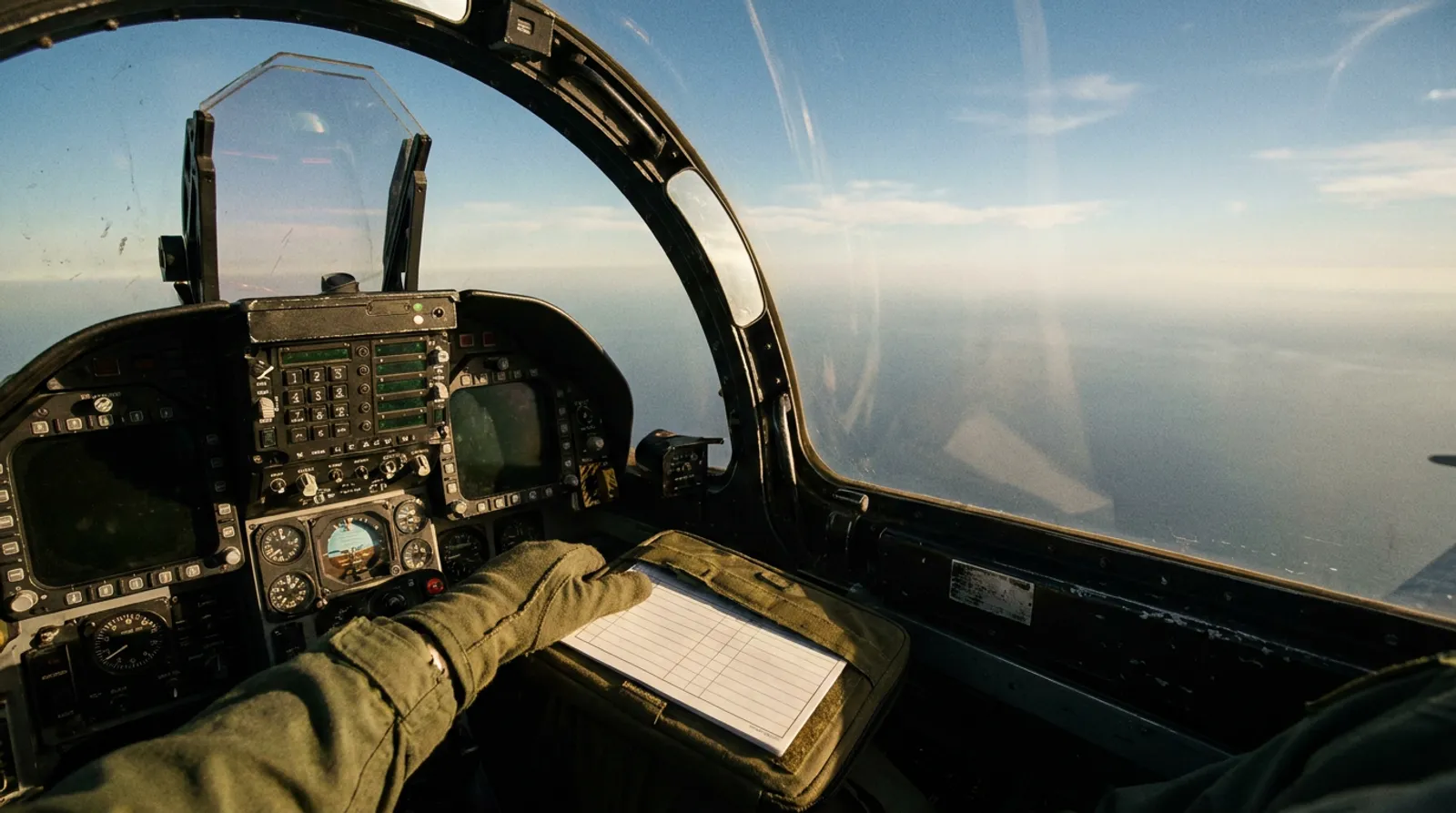
At the first open congressional UAP hearing in decades, in May 2022, Deputy Director of Naval Intelligence Scott Bray described where it ended up. Navy and Air Force crews, he testified, "now have step-by-step procedures for reporting on a UAP on their kneeboard." His summary: "If you see something, you need to report it."
What we know, and what we don't
What we know
- In April 2019 the Navy confirmed it was formalizing how pilots report unknown aircraft in its ranges and said such intrusions had happened regularly since 2014.
- Pilots tied to the USS Theodore Roosevelt strike group described repeated encounters in 2014 and 2015.
- The intelligence community later credited the Navy's March 2019 mechanism as the first standardized UAP reporting process.
What we don't
- What the classified guidelines actually say.
- What the objects near the Roosevelt and other strike groups were.
- How many encounters went unreported in the years before pilots had a form to fill out.
A form, not a flying saucer
It's easy to shrug at a reporting guideline. There's no video, no wreckage, no whistleblower.
But data comes before answers. Every official UAP report since 2021 rests on what pilots wrote down because of this change. The Navy didn't say what its aviators were seeing. It said, for the first time in a long time, that it wanted to know.
So which was the bigger story in 2019: that unknown objects were showing up near Navy jets on a regular basis, or that it took the Navy until 2019 to ask its pilots to write them down? Tell us what you think.
Sources
- How frustrated pilots got the Navy to stop dismissing their UFO sightings — The Washington Post via Anchorage Daily News, 2019
- Aliens, ahoy! Navy developing guidelines on reporting UFO sightings — Military Times, 2019
- US Navy drafting new guidelines for reporting UFOs — Fox News, 2019
- U.S. Navy's UFO / UAP guidelines to remain classified — The Black Vault, 2019
- The Black Vault on the Navy records behind The New York Times' 2019 pilot story — The Black Vault, 2020
- Navy officially releases UFO / UAP videos, calls them "historical" — The Black Vault, 2020 (Gradisher's September 2019 statement)
- Group of senators including Virginia Sen. Mark Warner receive classified briefing on UFO sightings — CNN via WTKR, 2019
- US Navy admits UFO footage shows "unidentified aerial phenomena" — Spectrum News, 2019
- Establishment of Unidentified Aerial Phenomena Task Force — U.S. Navy / Department of Defense, 2020
- Preliminary Assessment: Unidentified Aerial Phenomena — Office of the Director of National Intelligence, 2021
- Unidentified Aerial Phenomena: open hearing transcript — House Permanent Select Committee on Intelligence, 2022
End of file · VUF-1904-27C8
Indexed under
- #congress
- #pentagon
- #us-navy
- #pilot-sighting
- #stigma
- #theodore-roosevelt
- #uap-task-force
Filed by · VUF-1904-27C8
ViralUFOs Admin
ViralUFOs Editorial · Field Desk
The ViralUFOs editorial team investigates UFO reports, ufology research, and UAP news with an evidence-first commitment — separating documented fact from hypothesis.
About the deskField Gear · The Depot
Gear for the field
- FG-01
- FG-02
- FG-03
- FG-04








01Related files
 NewsVUF-2609-0350Under Oath: What David Grusch Actually Told Congress, and What Came NextCrash retrievals, 'nonhuman' biologics, secret budgets and reprisals. In July 2023 a former intelligence officer told Congress all of it under oath. Here is exactly what he said, what he didn't, and how the Pentagon answered.Sep 15, 2026 · 7 min read
 NewsvideoVUF-2606-3263Under Oath: The Day UFOs Reached the Halls of CongressDecorated officers and a former intelligence official sat before Congress, raised their right hands, and testified — under oath, on live television — about recovered craft and decades of secrecy. The subject is no longer fringe. It is federal.Jun 14, 2026 · 4 min read
 NewsVUF-2509-97A2A Hellfire, a 'Tic Tac' and Five Witnesses: Inside Luna's September 2025 UAP HearingOn September 9, 2025, Rep. Anna Paulina Luna's declassification task force put military UAP witnesses under oath, and a congressman played video of a Hellfire missile striking an orb off Yemen. Here's who said what, and what the Pentagon said back.Sep 10, 2025 · 6 min read